Planned from the inside out.
A walk-in earns its space only when everything has a place. So we start with what goes inside — then build the room around it.
What you own
We start with the wardrobe itself — the split between what hangs and what folds, the shoes, the bags, the things reached for daily. That audit sets every dimension that follows.
A place for each thing
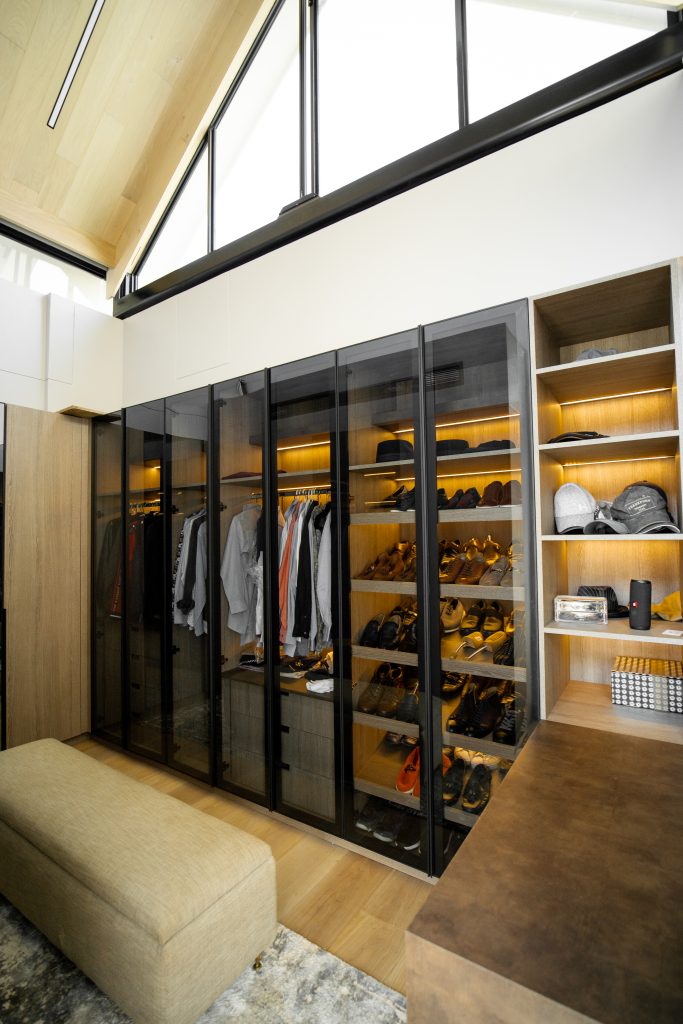
Long-hang for coats and dresses, double-hung for shirts and folded trousers, drawers for smaller items, open shelving for bags and boxes, angled racks for shoes. Each zone sized from the audit, never from a standard carcass.
Made to the room
The system is built to the walls you have — corner solutions, full-height runs, sliding doors where the floor is tight and hinged where it isn't. Soft-close throughout, in German and Italian boards or natural timber.
The dressing-room details
Integrated lighting, full-length mirrors, and where the room allows, a central island with drawers and a surface to lay things out. The details that turn a cupboard into a dressing room.
Three ways into a wardrobe.
The same thinking, scaled to the space — from a room of its own to a single fitted wall.
The walk-in dressing room
A room in its own right — zoned, lit and finished so everything has a place and the space works at six in the morning.
The reach-in wardrobe
The same logic fitted to a single wall, for bedrooms where a separate room isn't on the cards.
Shared & his-and-hers
Two routines in one room, divided down the middle so neither gets in the other's way.